
About Us
A regional One Health research network advancing preparedness for emerging infectious diseases in East and Central Africa
Our Story
We work across Kenya, Uganda, Tanzania, and the Democratic Republic of Congo.
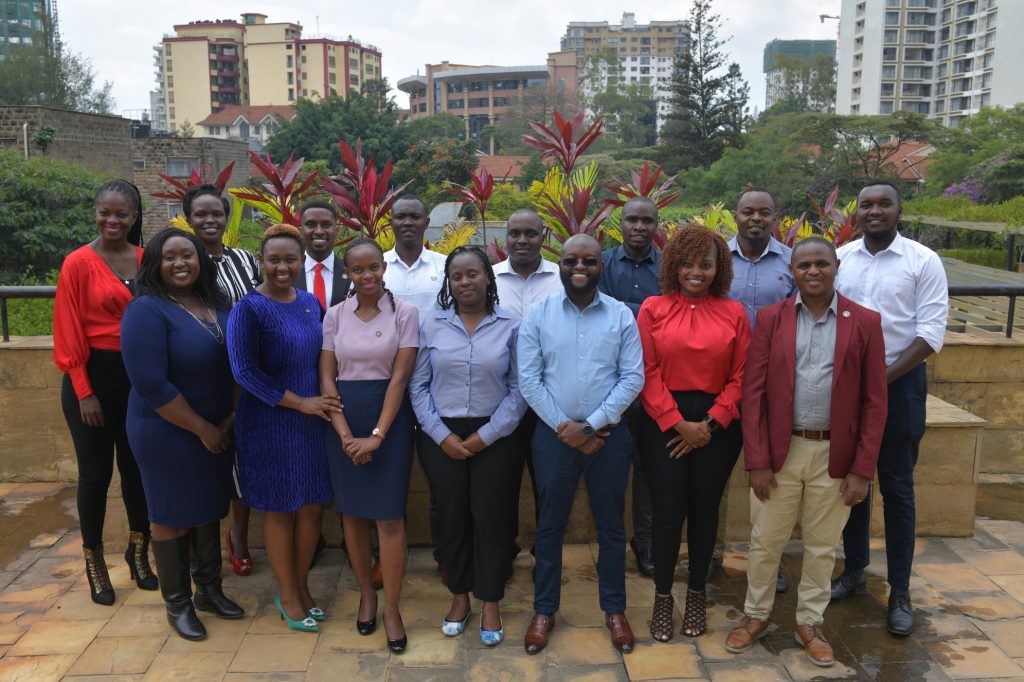
The Centers for Research in Emerging Infectious Diseases – East and Central Africa (CREID ECA) is a research and surveillance network hosted by Washington State University Global Health Kenya. We work across Kenya, Uganda, Tanzania, and the Democratic Republic of Congo to detect, study, and prevent emerging and re-emerging infectious diseases at the human–animal–environment interface.
As part of the NIH-funded global CREID network, we bring together scientists, laboratories, ministries, and academic institutions to generate evidence that strengthens outbreak preparedness and health security.
Our Mission
To advance scientific understanding and regional capacity to detect, characterize, and respond to pathogens of epidemic and pandemic potential through collaborative One Health research and surveillance
Our Vision
A future where East and Central Africa is equipped with the knowledge, infrastructure, and expertise to identify and contain emerging infectious diseases before they become global threats.
What We Do
We Focus On:-
- Field Surveillance of wildlife, livestock, vectors, and high-risk environments
- Pathogen Discovery & Genomics to track disease evolution and transmission
- Epidemiological Research to understand drivers of spillover and spread
- Capacity Building & Training for scientists, ministries, and laboratories
- Regional Coordination & Data Sharing to inform policies and response actions
Where We Work
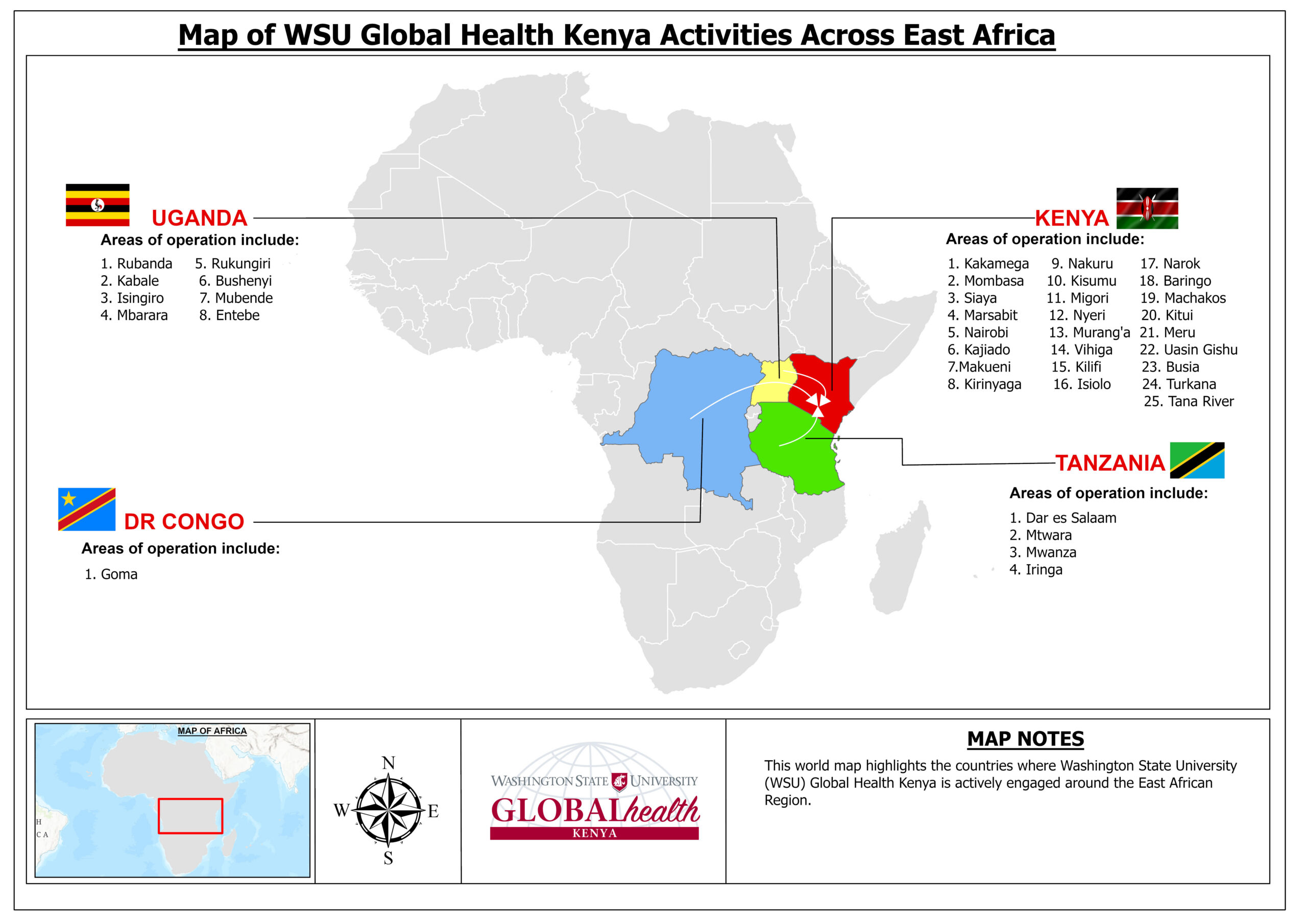
This map highlights the African countries where Washington State University (WSU) Global Health Kenya is actively engaged. It illustrates WSU’s regional footprint, showcasing countries where the organisation supports research, strengthens health systems, and addresses critical public health challenges. The visualisation underscores WSU GH Kenya’s commitment to advancing sustainable solutions and improving health outcomes across diverse populations in Africa